Nurturing Healthy Eating Habits: Feeding Your Child
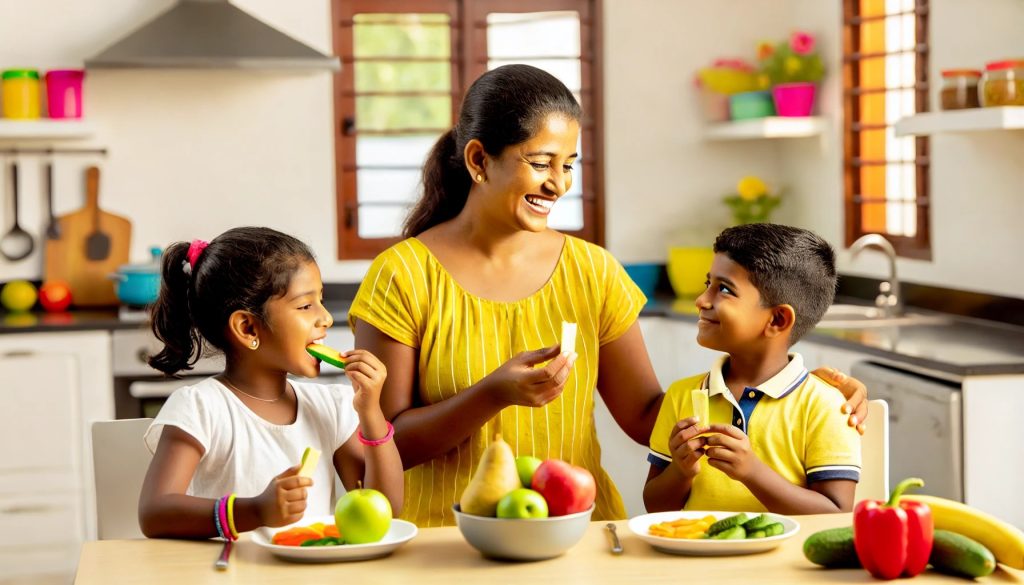
Feeding your child can be an exciting but challenging task. This phase of development in a 3-5 year old child is marked by growing independence and changing tastes. This section provides insights and practical tips for mothers to navigate child feeding with confidence and promote healthy eating habits.
1. The Importance of Healthy Eating:
Nutrition Matters: Proper nutrition is essential for your child’s growth and development during these years.
Laying the Foundation: The eating habits your child forms now can shape their lifelong relationship with food.
2. Encouraging Healthy Choices:
Model Healthy Eating: Be a role model by eating a balanced diet. Children often mimic their parents’ eating habits.
Variety is Key: Introduce a wide variety of foods to expand your child’s palate and it will provide a range of nutrients. (Rainbow coloured food plate).
3. Mealtime Environment:
Create a Positive Atmosphere: Make mealtimes enjoyable and stress-free. Avoid arguments or distractions during meals. Focus on the food plate and the meal.
Family Meals: Whenever possible, eat together as a family. It promotes healthy eating habits and provides a valuable bonding time.
4. Involving Your Child:
Empower Your Child: Allow your child to have a say in their meals. Offer choices within healthy options. For example, “Would you like carrot or pumpkin with your dinner?”
Meal Preparation: Involve your child in meal preparation. It can make them more excited to try new foods.
6. Handling Picky Eaters:
Be Patient: Picky eating is common at this age. Be patient and avoid pressuring your child to eat. Encourage but don’t force.
Offer Variety: Continue to offer a variety of foods, even if your child rejects them initially. Taste preferences can change over time. Therefore try to prepare food using different recipes. (eg: if your child refuse boiled egg, try to make an fried egg. Child may prefer the fried egg over the boiled egg)
7. Healthy Snacking:
Choose Nutritious Snacks: Always choose healthy snacks like fruits, vegetables, smashed potatoes, yogurt, cheese etc… Limit sugary, salty and processed snacks.
Scheduled Snacks: Plan snack times between the main meals and keep at least 2-3 hour gap between the main meal and the snack.
8. Hydration:
Encourage Water: Make water the primary beverage. Limit sugary drinks. It’s better to eat fruits rather than making fruit juice. And don’t add sugar to fruit juice.
9. Special Diets and Allergies:
Consult a Healthcare Professional: If your child has special dietary needs or allergies, consult a healthcare professional for guidance.
Nurturing healthy eating habits in your child is a vital aspect of parenting. The tips and insights provided here aim to help mothers navigate child feeding with confidence and support their child’s growth and development. Remember that every child is unique, so adapt these suggestions to suit your individual circumstances. By fostering a positive mealtime environment and encouraging healthy choices, you’ll not only enhance your parenting self-efficacy but also set the stage for a lifetime of healthy eating habits for your child.